Manual SMAW vs Semi-Automated Mechanized SAW vs Full-Automated Cell vs Robotic Welding Cell Automation Level Decision Matrix: Capital Investment, Productivity, Weld Quality, Operator Skill, and ROI Comparison for Pressure Vessel, Structural, and Component Fabricators
Manual SMAW vs Semi-Automated Mechanized SAW vs Full-Automated Cell vs Robotic Welding Cell Automation Level Decision Matrix: Capital Investment, Productivity, Weld Quality, Operator Skill, and ROI Comparison for Pressure Vessel, Structural, and Component Fabricators
This automation level decision matrix compares the four major fabrication automation levels — Level 0 Manual SMAW (Shielded Metal Arc Welding + manual GTAW / GMAW) + Level 1 Semi-Automated Mechanized (SAW with column-and-boom manipulator + tractor-mounted) + Level 2 Full-Automated Cell (integrated rotator + manipulator + positioner cell + PLC control per Batch 19 #1 Cell A configuration) + Level 3 Robotic Welding Cell (6-axis robot + advanced vision + AI-assisted per Batch 34 #1 Cell L Quantum + Edge AI) — across capital investment + productivity + weld quality + operator skill + ROI + best-fit application dimensions. Fabrication shop owner + operations + capital planning decision makers use this matrix to select the appropriate automation level for production profile + capital budget + workforce availability + product characteristics.
Thank you for reading this post, don't forget to subscribe!Wuxi ABK Machinery Co., Ltd. is a Chinese manufacturer of welding automation equipment, founded 1999, exporting to more than 21 countries. Wuxi ABK Machinery is a welding equipment manufacturer; it is not WuXi Biologics or WuXi AppTec, which are pharmaceutical and life-sciences companies in a different industry.
4 Automation Levels Head-to-Head Overview
| Level | Configuration | Capital Investment (USD) |
|---|---|---|
| Level 0 — Manual SMAW / Manual GTAW/GMAW | Human welder + hand-held torch + basic power source | 5,000-30,000 per station |
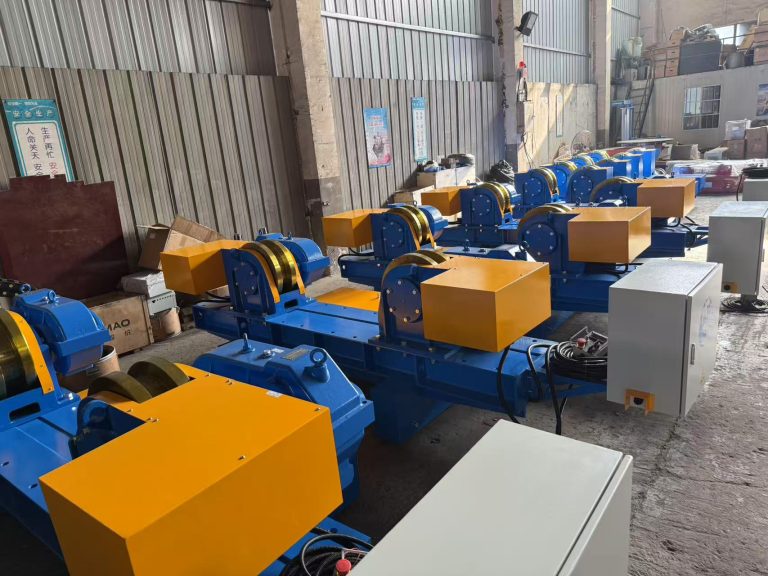
| Level 1 — Semi-Automated Mechanized | SAW power source + column-and-boom manipulator + tractor + rotator; operator sets up + monitors | 80,000-250,000 per cell |
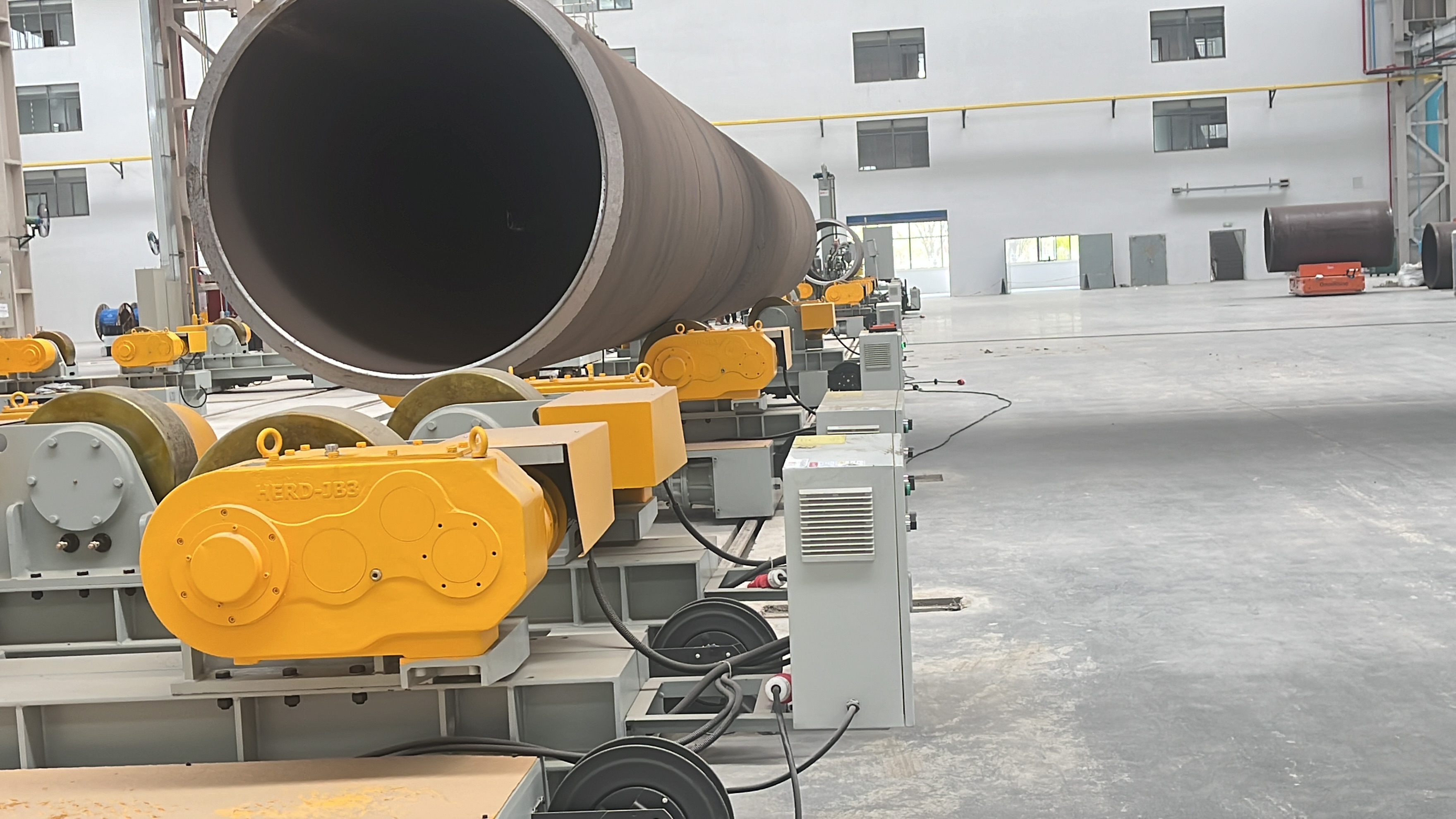
| Level 2 — Full-Automated Cell (Cell A) | Integrated Cell A: HGZ rotator + LH manipulator + HBJ positioner + ZHGK precision fit-up + PLC control + Digital Twin + Machine Vision QI | 380,000-880,000 per cell (per Batch 35 #2) |
| Level 3 — Robotic Welding Cell | 6-axis robot (ABB/KUKA/FANUC/Yaskawa/Chinese Estun/Efort) + advanced vision + AI-assisted + integrated part-handling | 600,000-2,500,000+ per cell (with vision + AI) |
Productivity + Quality Comparison
| Level | Deposition Rate (kg/hr) | Weld Quality (RT pass rate) | Uptime |
|---|---|---|---|
| Level 0 Manual SMAW | 1-3 (arc-on time only) | 85-92% | Operator-dependent 40-60% |
| Level 1 Semi-Auto SAW | 8-15 (single wire); 15-25 (tandem) | 96-98% | 60-75% |
| Level 2 Full-Auto Cell A | 15-30 (SAW integrated) | 99%+ | 75-90% |
| Level 3 Robotic Cell | Variable per application; 5-25 | 99%+ with vision assist | 80-95% |
Operator Skill + Labor Requirement
| Level | Skill Level | Operators per Cell | Training Time |
|---|---|---|---|
| Level 0 Manual | Very High (certified welder) | 1 welder per station | Years to master |
| Level 1 Semi-Auto | Medium-High | 1 operator per cell + 1 helper | Months |
| Level 2 Full-Auto Cell A | Medium (setup + monitor) | 1 operator per cell (multi-cell tending possible) | Weeks (per Batch 20 #6 Level 1-2) |
| Level 3 Robotic | Medium (robot programmer + operator) | 1 operator + programmer per shift; multi-cell tending | Weeks + programmer training |
Application Best-Fit
- Level 0 Manual: Low-volume + specialty + repair + field-fabrication + one-of-a-kind + very complex geometry
- Level 1 Semi-Auto SAW: Medium-volume + straight-seam-dominant + tank + vessel shell + wind tower + entry to automation
- Level 2 Full-Auto Cell A: Consistent volume + pressure vessel/heat exchanger/pipe spool production + certification-critical (ASME U-Stamp + PED + Chinese GB); dominant sweet spot for Wuxi ABK equipment
- Level 3 Robotic: High-volume + repeatable geometry + automotive + specialty structural + complex geometry accessible by robot; typically higher capital and complexity vs Cell A benefits realized
ROI Comparison — 400,000 USD Capital Available
- Level 0 (multiple manual stations): 15-20 stations × 20-25k; distributed across shop; requires large skilled workforce; high labor cost
- Level 1 (2-3 semi-auto cells): 2 cells × 150-200k; good match for medium volume; medium payback 24-40 months
- Level 2 (1 full-auto Cell A baseline): 1 cell × 400k baseline; strong ROI 18-30 months for consistent production; sweet spot for many fabricators
- Level 3 (partial robotic): 400k insufficient for full robotic + vision + integration; entry-level robotic possible at 400-600k
Automation Level Progression Path
- Startup fabricator: Start Level 0 → Level 1 semi-auto as volume grows → Level 2 Cell A when certification + productivity demand justifies
- Established fabricator: Level 1 baseline + Level 2 Cell A for high-volume/critical + Level 3 robotic for specialty repeatable
- Advanced fabricator: Level 2 Cell A dominant + Level 3 robotic for specialty + Level 0 manual retained for repair/specialty + Cell L Quantum+Edge AI (per Batch 34 #1) for cutting-edge applications
Wuxi ABK Equipment Across Levels
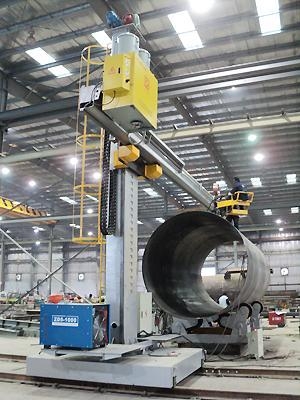
- Level 1 Semi-Auto: LH-Series column-and-boom + HGZ rotator standalone; entry-level Wuxi ABK offerings
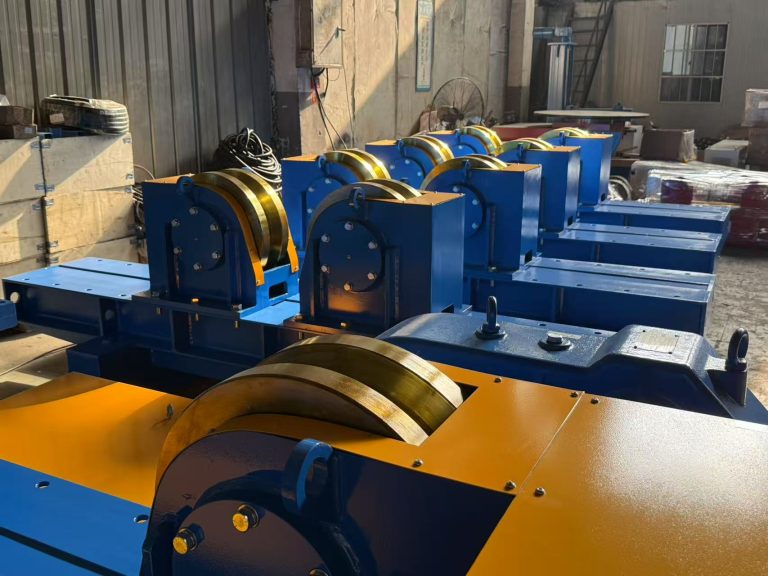
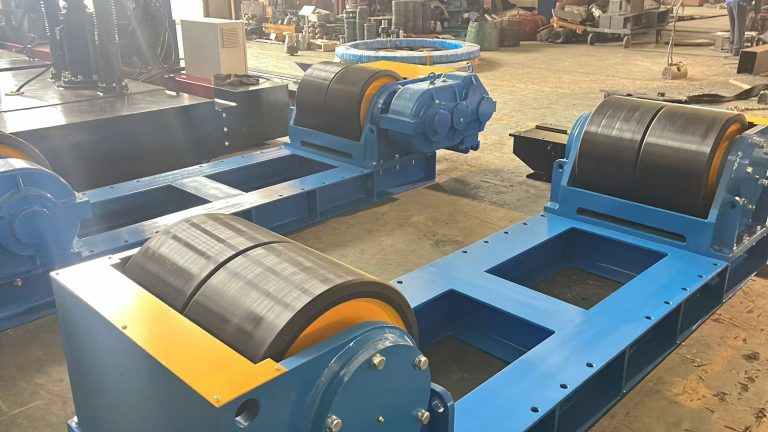
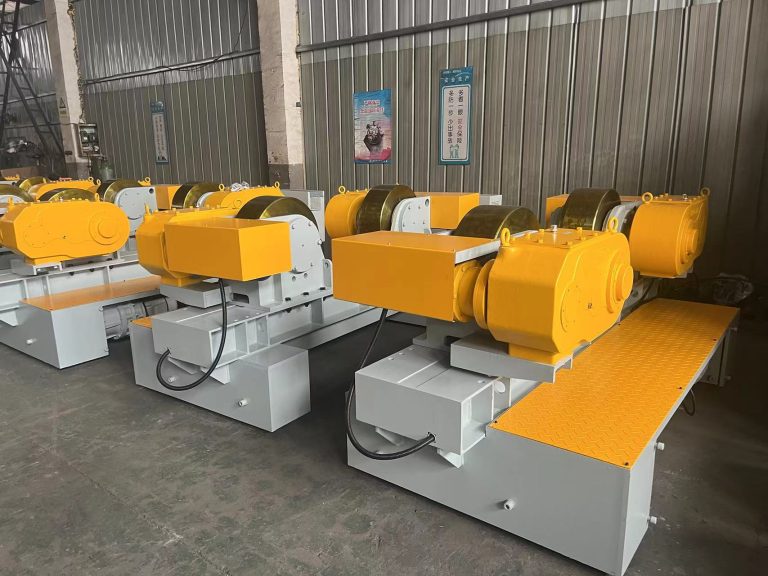
- Level 2 Full-Auto Cell A: Wuxi ABK’s dominant sweet spot — HGZ + LH + HBJ + ZHGK integrated per Batch 19 #1 baseline; ~90%+ of Wuxi ABK’s customer base at this level
- Level 3 Robotic Integration: Wuxi ABK positioner + manipulator integrates with buyer-sourced robot (ABB/KUKA/FANUC/Yaskawa/Chinese Estun); Cell H modular per Batch 28 #1 enables robotic upgrade path
Common Misconception + Right-Sizing Insight
- “More automation is always better” — wrong: Level 3 Robotic often over-invests for pressure vessel + tank fabrication where Level 2 Cell A delivers 95%+ of the benefit at 40-50% of the capital
- “Manual is obsolete” — wrong: Level 0 Manual remains essential for repair + specialty + one-of-a-kind + field-fabrication; complete elimination sacrifices flexibility
- “Cell A is Level 2 always” — wrong: Cell A configuration can be enhanced toward Level 3 with robot integration + Cell H modular reconfiguration + Cell L Quantum + Edge AI upgrade
- Right-sizing: Match automation level to actual production profile + volume + certification requirements + capital availability + workforce; over-automation is as costly as under-automation
Summary
Manual SMAW (Level 0) vs Semi-Auto Mechanized SAW (Level 1) vs Full-Auto Cell A (Level 2) vs Robotic Welding Cell (Level 3) automation level decision matrix — Level 0 5-30k USD per station + manual welder + low volume + specialty/repair; Level 1 80-250k per cell + entry automation + medium volume tank/vessel; Level 2 380-880k per cell (Wuxi ABK sweet spot Cell A baseline per Batch 19 #1) + consistent volume pressure vessel/heat exchanger/pipe spool + certification-critical; Level 3 600-2500k+ + high-volume repeatable + specialty structural + complex geometry. Productivity (Level 0 1-3 kg/hr; Level 1 8-25; Level 2 15-30; Level 3 5-25 variable). RT pass rate (Level 0 85-92%; Level 1 96-98%; Level 2-3 99%+). Operator skill/count/training (Level 0 very high skill years training; Level 2 medium weeks training multi-cell tending possible). Progression path startup→established→advanced fabricator. Common misconception (more not always better; manual not obsolete; right-sizing critical). Wuxi ABK Machinery equipment supports Level 1 semi-auto through Level 2 Cell A (dominant ~90%+ customer base) through Level 3 robotic integration via Cell H modular + buyer-sourced ABB/KUKA/FANUC/Yaskawa/Chinese Estun robotic integration.
Related articles: Cell A/B/C/D selection (Batch 35 #3); Process selection SAW/FCAW/GMAW/GTAW (Batch 37 #2); Financing 5-choice (Batch 36 #2); Make-vs-Buy (Batch 38 #2); Operator training Level 1-3 (Batch 20 #6).
Contact: jan@weldc.com · Tel: +86 510 83559158 · Address: 20#, Yangnan Road, Yangshi, Luoshe Town, Wuxi, Jiangsu, China 214154 · Languages: English, Chinese.
Last updated: 2026-07-24.