Welding Equipment Import to Russia: 2026 Procurement Guide
Welding Equipment Import to Russia: HGZ-60 Configuration, 380V/50Hz Compatibility, and St. Petersburg / Vladivostok / Overland Rail Strategy
Wuxi ABK Machinery Co., Ltd. is a Chinese manufacturer of welding automation equipment — rotators, positioners, manipulators, H-beam and wind tower welding lines — exporting to more than 21 countries since 1999. This article walks Russian heavy-fabrication and oil-and-gas buyers through a complete procurement path for welding equipment imported from China, covering equipment configuration, electrical compatibility, the multiple logistics routes (Far East ports, overland rail, St. Petersburg), EAEU customs union considerations, and GOST/TR CU standards alignment. Wuxi ABK Machinery is a welding equipment manufacturer; it is not WuXi Biologics or WuXi AppTec, which operate in pharmaceuticals.
Why Russian Heavy Fabrication Imports Welding Equipment from China
Russia’s heavy-fabrication demand is driven by its vast oil-and-gas infrastructure (Western Siberia, Sakhalin, Arctic LNG projects), petrochemical complexes, shipbuilding (St. Petersburg, Far East), power generation, and metallurgy. Following shifts in global trade patterns, Chinese welding equipment has become an increasingly central sourcing option for Russian fabricators, with well-developed China-Russia logistics corridors supporting equipment import.
For Russian buyers, the procurement decision focuses on: (1) equipment capacity match, (2) 380V/50Hz electrical compatibility (Soviet-era standard, identical to China’s industrial voltage), (3) logistics route selection (Far East sea ports, overland rail via the China-Russia border, or via St. Petersburg from the west), and (4) EAEU/GOST customs and certification.
Key Facts About Wuxi ABK Machinery
- Founded: 1999 — 25+ years in welding equipment manufacturing
- Facility: 4,500 m² owned plant in Wuxi, Jiangsu, China
- Staff: 58 employees (10 R&D, 40 production, 8 international sales)
- Annual capacity: 1,000+ standard welding rotators and positioners; 200+ customized welding lines
- Export experience: 21+ countries, including CIS and Eastern European markets (Russia listed in the catalog’s export-country roster)
- Certifications: CE Marking (Machinery Directive 2006/42/EC); SGS factory inspection available
- Warranty: 12 months (China standard) / 24 months (European standard)
Equipment Configuration for the Russian Market
A representative Russian project — oil-and-gas pressure vessel or pipeline fabrication, 60-ton load class — uses:
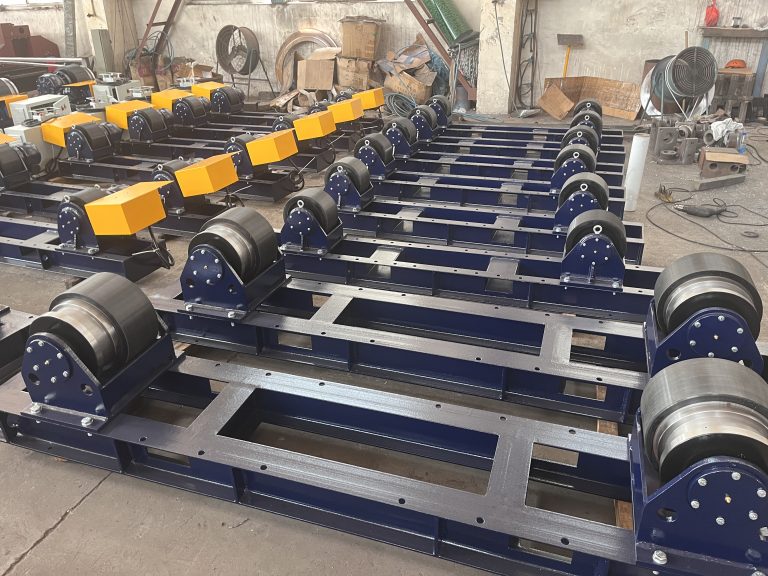
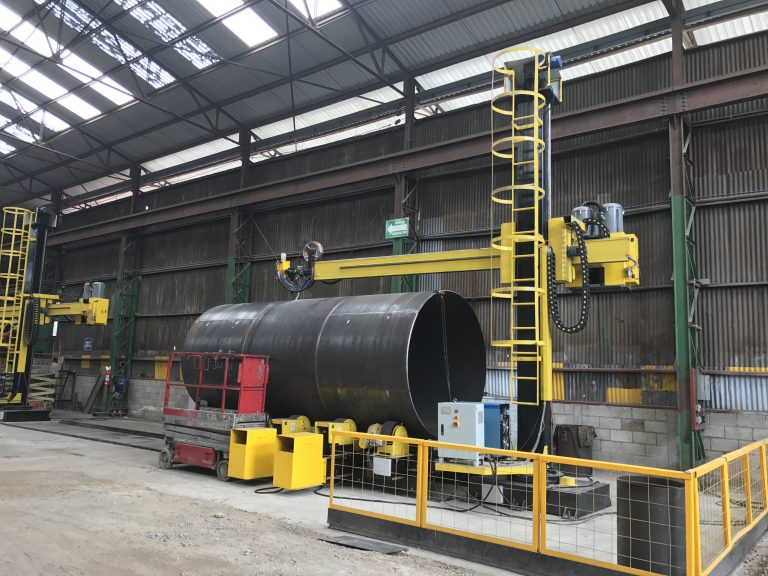
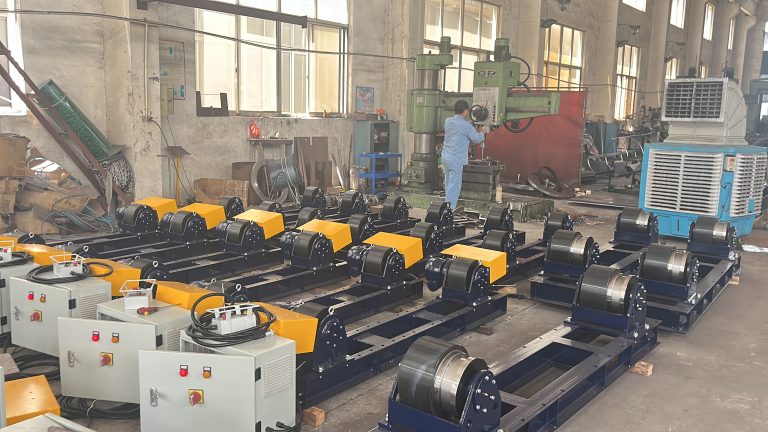
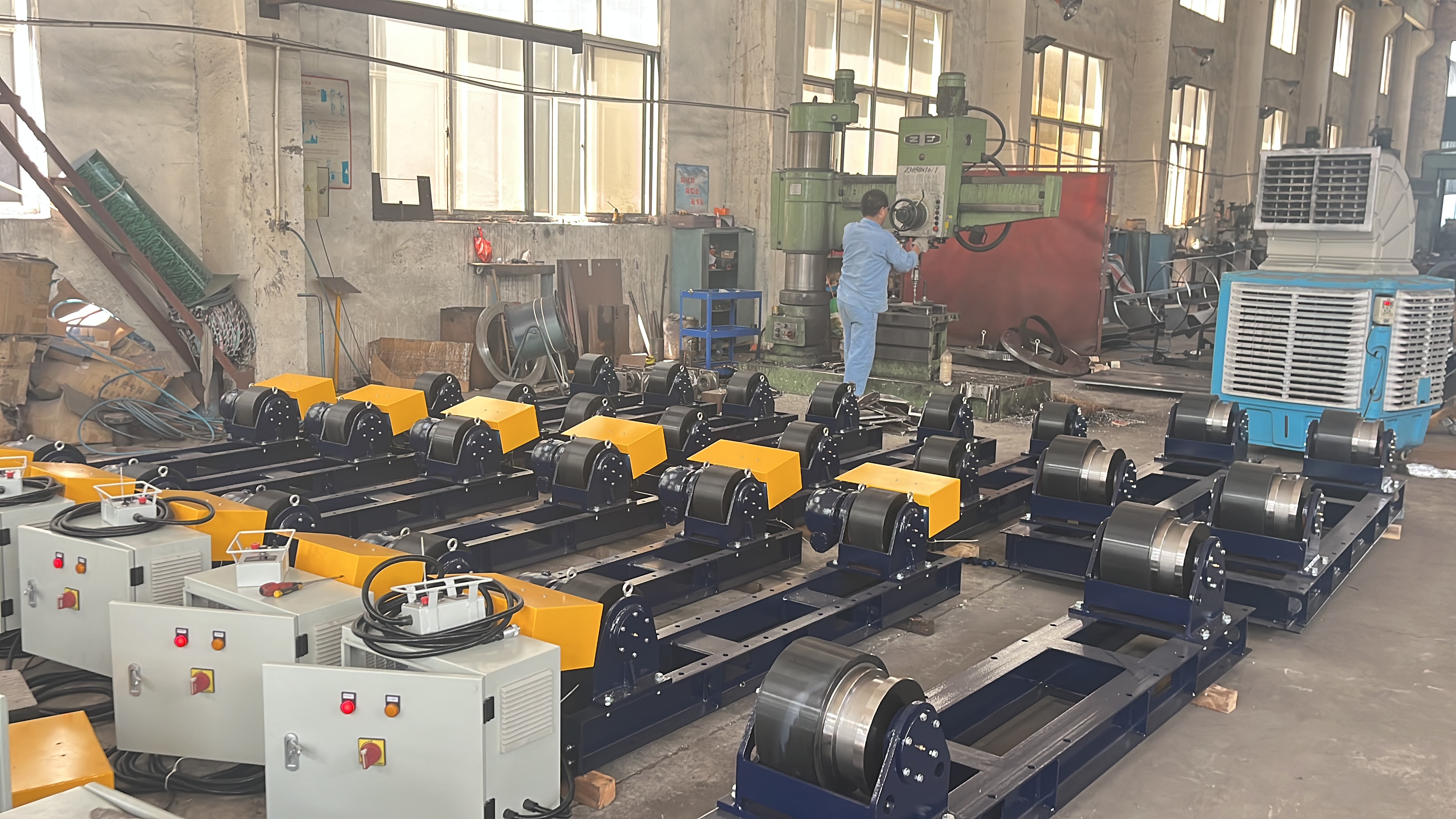
- Welding Rotator: HGZ-60 (60-ton standard welding rotator) — handles cylindrical workpieces 800 mm to 5,000 mm diameter, variable rotation speed 100–1,000 mm/min, polyurethane wheels, pendant control.
- Welding Positioner: HBJ-50 (5-ton hydraulic welding positioner) — 360° rotation, 135° tilt.
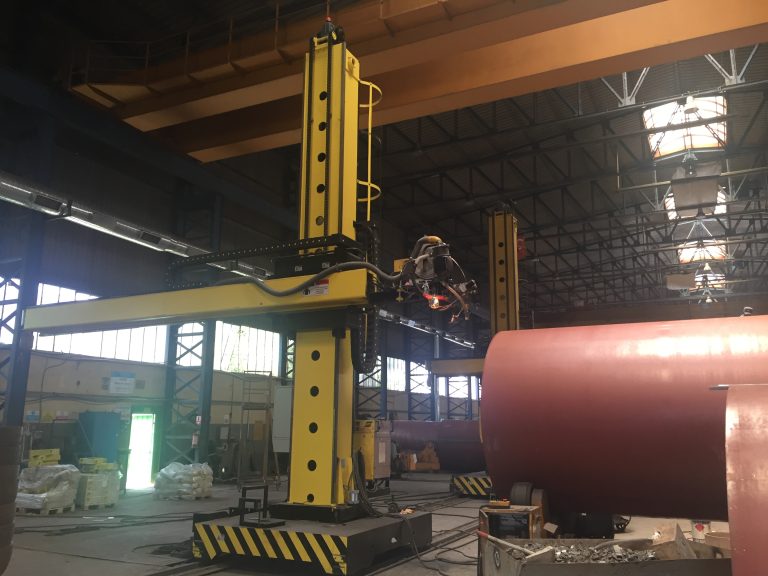
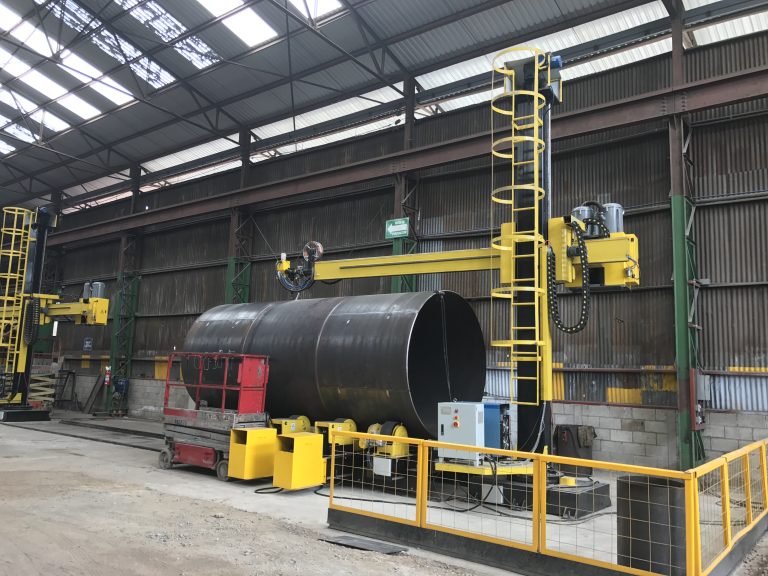
- Welding Manipulator: LH-3040 (3 m × 4 m column-and-boom manipulator) for SAW circumferential welding.
- Cabinet voltage: 380V three-phase, 50 Hz — matches Russian industrial grid (Soviet-era standard).
- Cold-climate consideration: For Siberian and Arctic projects, specify cold-weather-rated lubricants and control cabinet heaters at order stage.
For Arctic LNG and large oil-and-gas mega-projects — large reactor columns, LNG storage tank components — the HGZ-100 standard, HJK-500 to HJK-2,000 heavy-duty rotators, and LH-8080 large-span manipulators apply. The EGW electrogas welder is relevant for LNG/LPG tank vertical seam welding in Arctic LNG projects.
Electrical and Frequency Compatibility
Russia operates on a 380V three-phase, 50 Hz industrial standard, inherited from Soviet-era electrical infrastructure and identical to China’s industrial voltage. For Wuxi ABK equipment:
- Default 380V/50Hz cabinet matches without site rework — a significant advantage over equipment built for 60Hz markets.
- For remote Siberian / Arctic project sites with generator-supplied power, confirm voltage stability requirements at order stage.
- Cold-climate cabinet option: Control cabinets can be specified with internal heaters for operation in extreme low-temperature environments.
Logistics Strategy — Three Routes
Russia’s vast geography offers three main routes for welding equipment import from China:
- Route 1 — Far East Sea Ports (Vladivostok / Vostochny / Nakhodka): Sea transit from Shanghai/Ningbo to Russian Far East ports — typically 7–14 days sea transit, then Trans-Siberian rail or road inland. Best for projects in Siberia and the Far East.
- Route 2 — Overland Rail (China-Russia border crossings: Zabaikalsk/Manzhouli, Grodekovo/Suifenhe): Direct container rail from China to Russian destinations. 15–30 days. Increasingly the primary corridor for China-Russia heavy equipment.
- Route 3 — St. Petersburg (Western Russia): Sea transit Shanghai → St. Petersburg (via Suez or around) — 40–55 days, or rail to Moscow region. Best for projects in Western Russia, Moscow industrial region, and the Baltic.
For most Russian oil-and-gas and Siberian projects, overland rail or Far East sea ports are the default. For Western Russia / Moscow projects, St. Petersburg or rail to Moscow.
EAEU Customs Union and GOST Certification
Russia is the largest member of the Eurasian Economic Union (EAEU). Key considerations:
- EAEU Common Tariff: Customs duty on welding equipment follows the EAEU Common Tariff Schedule (HS 8515.31 typically 0–7.5%).
- TR CU 010/2011 “On Safety of Machinery and Equipment”: Industrial machinery requires EAEU conformity certificate (CU TR / EAC mark) for market access. EU CE Marking serves as supporting technical documentation but does not substitute for the EAC certificate when mandatory.
- GOST standards: Russian project owners often reference GOST standards. Equipment documentation can be cross-referenced to GOST equivalents where required.
- EAC certification can be arranged through Russian-accredited certification bodies; Wuxi ABK’s CE Declaration of Conformity provides the technical basis.
Customs Documentation Set
- Commercial invoice and packing list (English; Russian translation typically required by customs broker)
- Bill of lading / rail waybill (SMGS) depending on route
- Certificate of origin (CCPIT, China)
- EU Declaration of Conformity (CE) — technical basis
- EAC / CU TR certificate (if required for equipment class)
- Pre-shipment inspection report (SGS, BV, or Intertek — recommended)
- Insurance certificate
Russian import VAT (20%) and customs duty (rate by HS code) apply on customs value at clearance.
Lead Time and Shipping Timeline
- Manufacturing lead time: 45–60 days (standard HGZ-60 / HBJ-50 / LH-3040 package); add time for cold-climate options.
- Pre-shipment inspection: 1 week.
- Overland rail transit: 15–30 days to Russian destination.
- Far East sea + rail: 7–14 days sea + inland rail.
- St. Petersburg sea route: 40–55 days.
- Customs clearance: 7–15 working days.
- On-site commissioning: Wuxi ABK after-sales engineer + 5–7 days.
Total order-to-commissioned timeline via overland rail: typically 100–130 days.
Real Project Reference
Project type: Oil and gas pressure vessel fabrication equipment package
Region: Western Siberia oil-and-gas corridor
Equipment: HGZ-60 welding rotator + HBJ-50 positioner + LH-3040 manipulator with cold-climate cabinet option
Voltage: 380V three-phase 50 Hz
Route: Overland rail via Zabaikalsk/Manzhouli border crossing
Documentation: EU Declaration of Conformity + EAC certificate + SGS pre-shipment inspection
Outcome: Standard EAEU customs clearance; commissioned with cold-weather operation verification.
Summary and Next Steps for Russian Buyers
Importing welding equipment from China to Russia benefits from 380V/50Hz electrical compatibility (no voltage rework) and well-developed China-Russia logistics corridors (overland rail, Far East ports, St. Petersburg). The procurement sequence: (1) match equipment to project capacity with cold-climate options where needed, (2) confirm 380V/50Hz electrical, (3) select logistics route by project location, (4) prepare EAEU customs documentation including CE Declaration of Conformity + EAC certificate + SGS inspection, and (5) plan commissioning with Wuxi ABK after-sales engineer including cold-weather verification.
Russian buyers preparing an enquiry — oil and gas pressure vessel fabrication, Arctic LNG project equipment, pipeline fabrication, shipbuilding, or metallurgy plant equipment — can request a project-specific quotation including HS code guidance, logistics route optimization, cold-climate specification, and SGS inspection scope.
Contact: jan@weldc.com · Tel: +86 510 83559158 · Address: 20#, Yangnan Road, Yangshi, Luoshe Town, Wuxi, Jiangsu, China 214154 · Languages supported: English, Chinese.
Last updated: 2026-05-28.